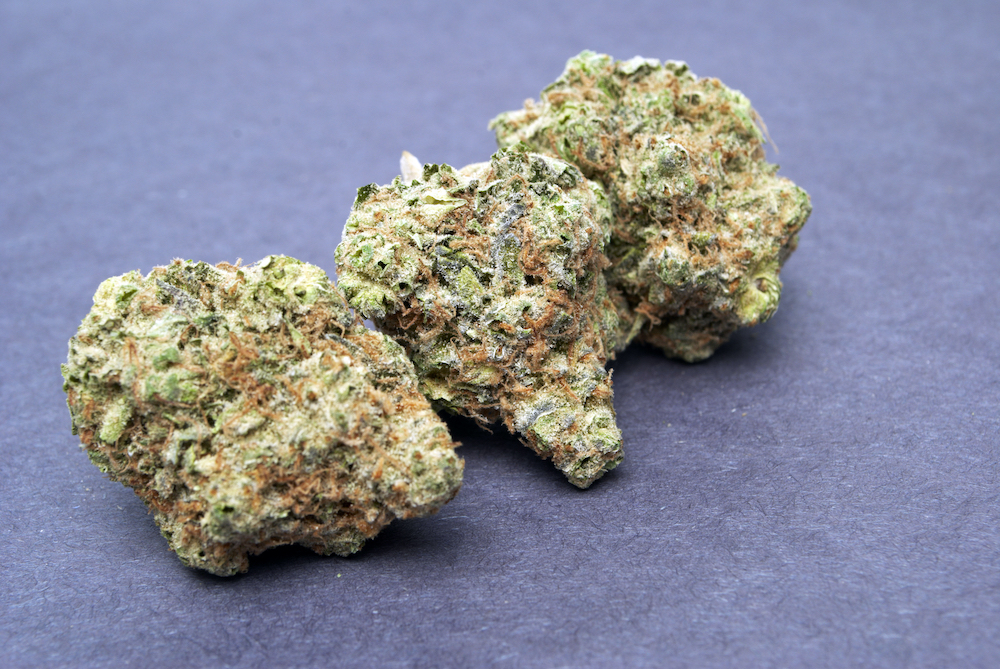
Something has shifted in the solventless concentrate market. Walk through any high-end dispensary and you will notice a pattern: static hash products are commanding premium shelf space and selling out faster than traditional alternatives. In Europe, the trend is already enormous, and California cultivators have begun sending harvests for static processing. Industry leaders describe 2025 as a year of record sales, with static sift positioning itself as the next evolution beyond fresh frozen live rosin.
This is not hype. It is the result of converging forces: consumer demand for cleaner products, scientific validation of electrostatic separation, and equipment innovation that has made commercial-scale production viable.
The purity problem: why traditional methods hit a ceiling
Solventless extraction has always faced a fundamental trade-off. Methods like dry sifting and ice water extraction can produce excellent concentrate, but they hit a purity ceiling that no amount of technique alone can overcome.
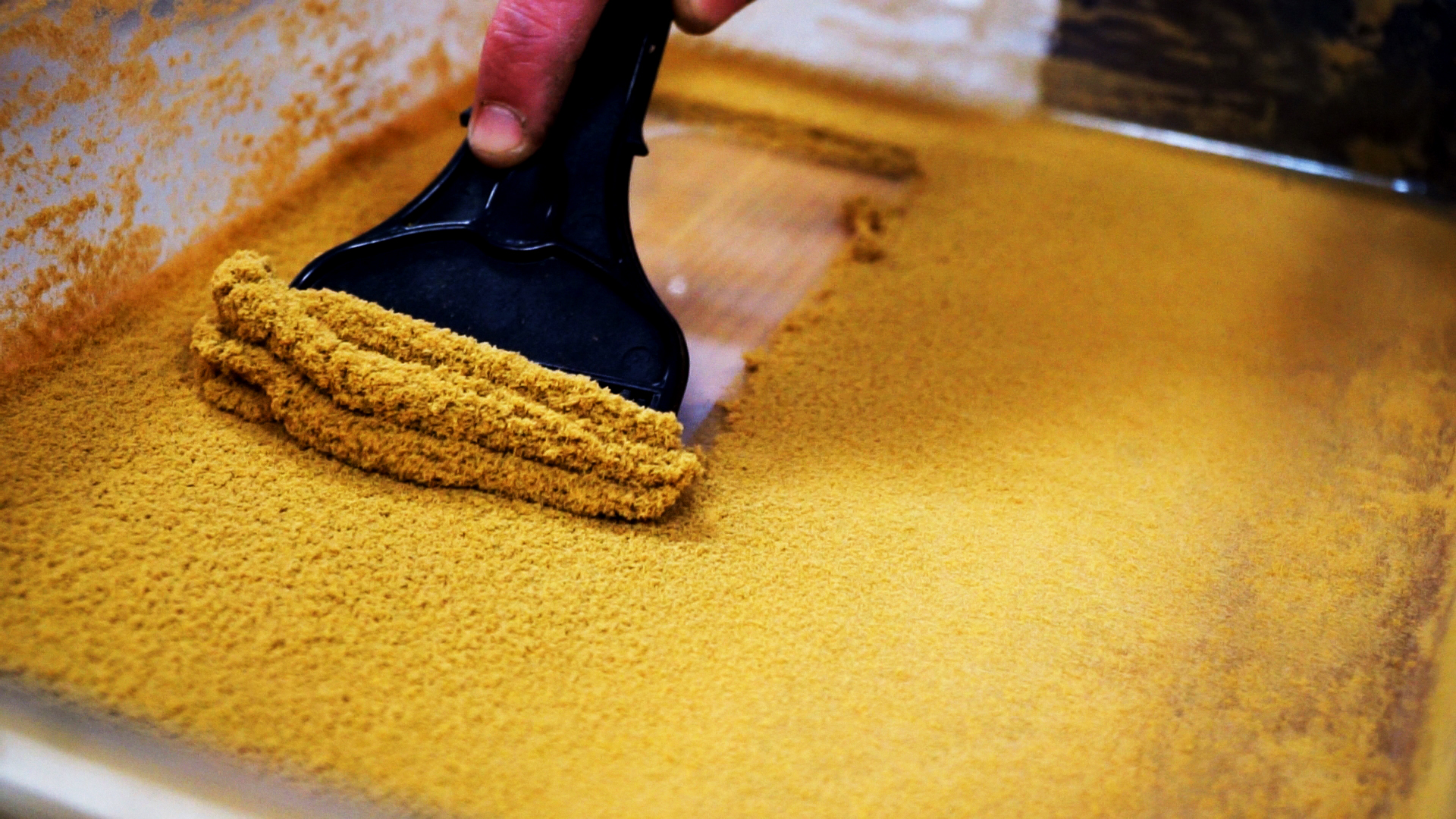
Traditional dry sifting typically yields material at 40–60% purity. To work properly, it must be carried out at 5°C or below. The colder the environment, the more brittle the trichome heads become and the cleaner they separate, so lower temperatures consistently deliver better results. Bubble hash pushes purity higher, reaching up to 90% in premium examples. However, it requires tightly controlled cold conditions, and often involves ice, in addition to water and significant drying equipment. Neither method achieves the near-total separation that defines the current market’s most sought-after products.
The limitation is physical, not procedural. When you agitate plant material over screens, trichome heads break free, but so do microscopic fragments of leaves, stalks, and pistils. These contaminants cannot be separated by mesh alone, and they dilute the final product while introducing off-flavors and harshness on the dab.
Static electricity offers a solution that screen technology cannot: charge-based separation. Trichome heads and plant contaminants naturally carry opposite electrical charges. Exploit that difference, and you can separate them with a precision that mechanical filtration cannot match.
The science: why electrostatic separation works
The physics is straightforward. Research has demonstrated that cannabis trichomes acquire a negative electric charge, while plant biomass acquires a positive charge. When powdered material passes through a controlled electric field, the oppositely charged particles follow divergent trajectories. Trichome heads collect on one electrode; contaminants collect on the other. 
The results are measurable. A published comparison of separation methods found that conventional dry sifting yields 40–50% purity on a first pass. When electrostatic separation is applied, first-pass purity jumps to 80–95%. With multiple passes, purity can reach 98% or higher.
This McGill thesis research produced even more granular data. After three treatment cycles, total THC concentration in the positive fraction increased from 262.2 mg/g to 493.7 mg/g, an 88% increase. This is not marginal improvement; it is a fundamental restructuring of the product’s composition.
The terpene story is equally compelling. Traditional solventless methods typically lose 15–30% of the aromatic profile during processing. Static hash preserves the entire spectrum almost intact. For consumers who value flavor as much as potency, this difference is immediately noticeable.
The market forces driving adoption
First, consumer education.
The solventless movement has spent years teaching consumers to value purity and terpene preservation. Static hash delivers both at levels that traditional methods cannot match. As awareness grows, demand follows.
Second, competitive validation.
Hash competitions, have become proving grounds for extraction techniques. Full-melt products made with static filtration now dominate the winner’s circle. When the most respected judges in the industry consistently reward static hash, the market takes notice.
Third, equipment innovation.
The technique itself is not new. Hashmakers have used rudimentary static separation for decades, with balloons, parchment paper, and combs charged with wool. What has changed is the availability of purpose-built equipment that transforms a craft technique into a scalable production process. A key milestone in this shift is Charles McGowan’s patented Plasmastatic technology, which turns static separation from a hand-held trick into a controlled, repeatable system. Instead of relying on improvised tools and inconsistent charges, it delivers precise, stable electrostatic separation at production scale.
From craft to commercial: the equipment evolution
The early static hash workflow was labor-intensive and difficult to standardize. Manual techniques like the DVD method (wrapping parchment around a box and making repeated passes) can elevate dry sift from 50% to 99% purity, but they demand obsessive patience and offer limited throughput. Paint roller adaptations improved surface area but remained fundamentally manual processes.
Commercial operations needed something different: equipment that could deliver consistent results at scale without sacrificing the precision that defines static hash.
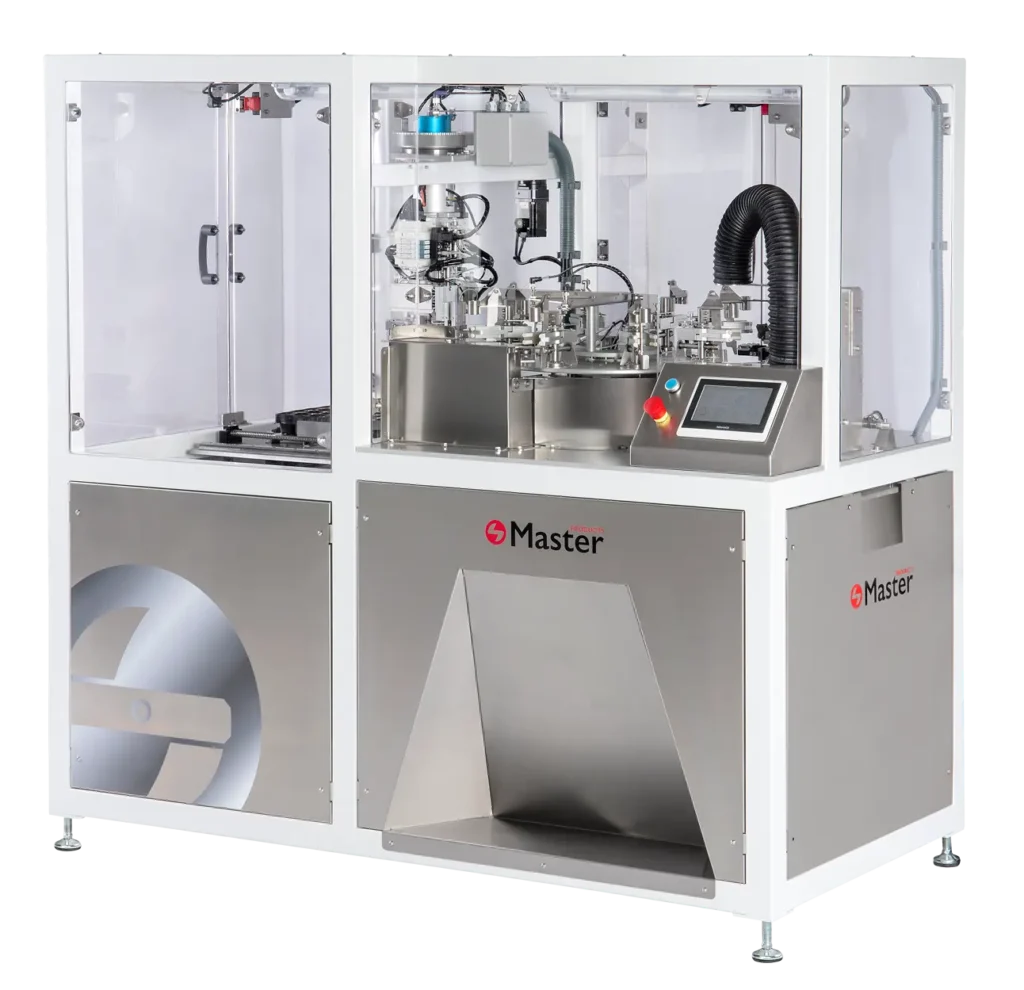
This is where modern electrostatic separators enter the picture. Systems like the Plasmastatic range use controlled electric fields to automate the separation process, removing the variability of human technique while dramatically increasing throughput. The technology is EU GMP compliant, built from stainless steel, and designed for seamless integration into existing production workflows.
For processors exploring static hash production, the question is no longer whether the technology works, the data is clear. The question is whether their feedstock and production volume justify the investment. This is why bench-scale testing has become an essential first step in the evaluation process.
Testing before scaling: the responsible approach
Not every cultivar separates cleanly. Trichome morphology, resin chemistry, and moisture content all influence outcomes. A feedstock that performs beautifully in one facility may require significant adjustment in another.
The Plasmastatic Mini was designed specifically for this evaluation phase. It is a desktop-scale unit that allows processors to test their biomass with minimal material consumption, a batch of 2–4 grams is sufficient to produce a meaningful sample for analysis. The Mini uses the same electrostatic separation principle as industrial-scale systems, providing data that translates directly to larger deployments.
For laboratories, research facilities, and craft-scale processors, the Mini also serves as a production-ready solution for small-batch refinement where precision and material cleanliness are paramount.
What comes next: the future of static hash
The trajectory is clear. Static hash has moved from niche technique to market trend to established category. The next phase will likely involve genetic selection, breeding cultivars specifically for optimal trichome morphology for electrostatic separation.
For processors evaluating the opportunity, the message is straightforward: the science is validated, the market is receptive, and the equipment is available. The question is not whether static hash belongs in your product lineup, but how quickly you can bring it to market.
Master Products supplies professional-grade electrostatic separation technology to processors across Europe. To evaluate whether static hash production is suited to your operation, explore the Plasmastatic range at masterproducts.es.