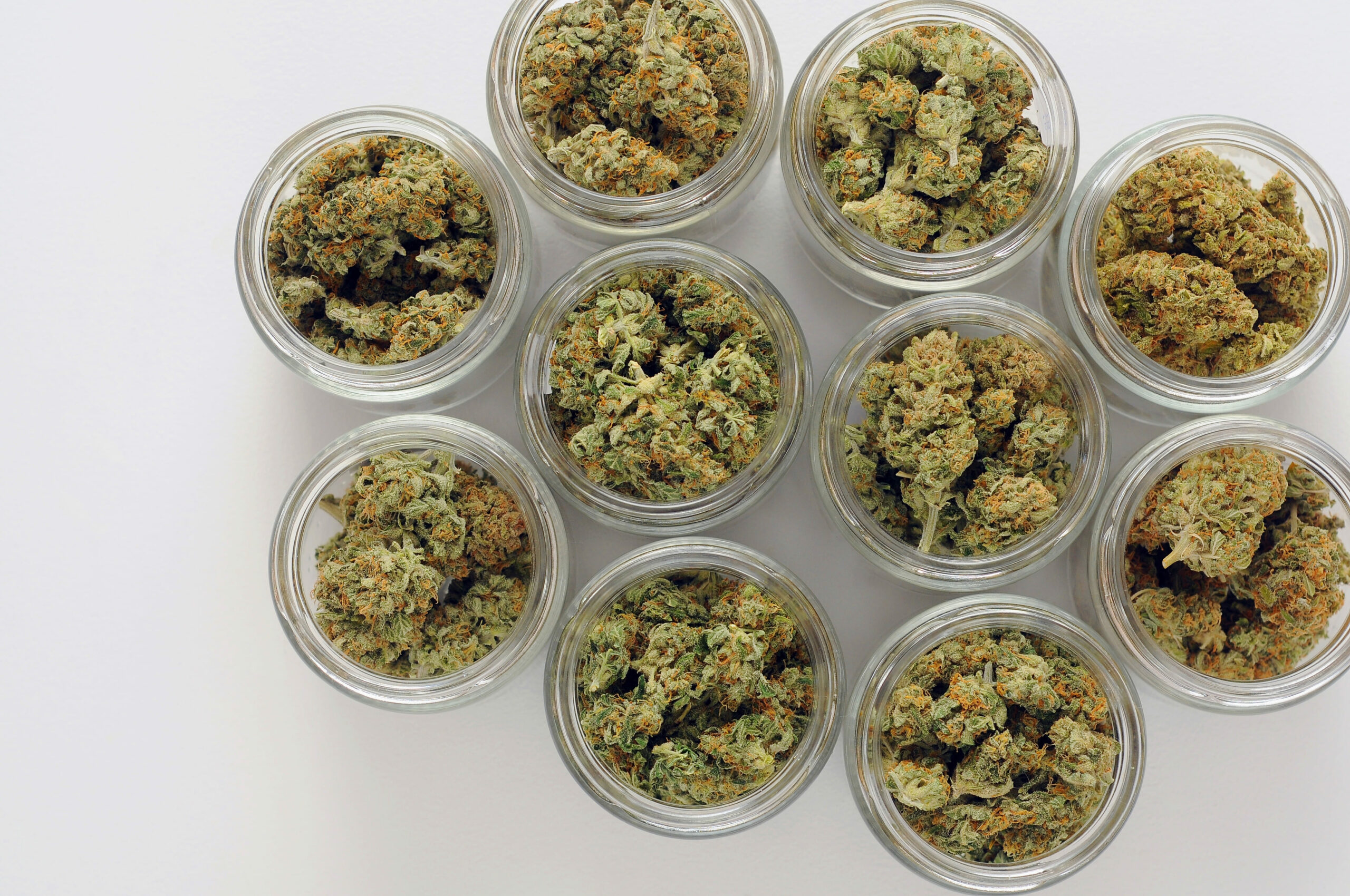
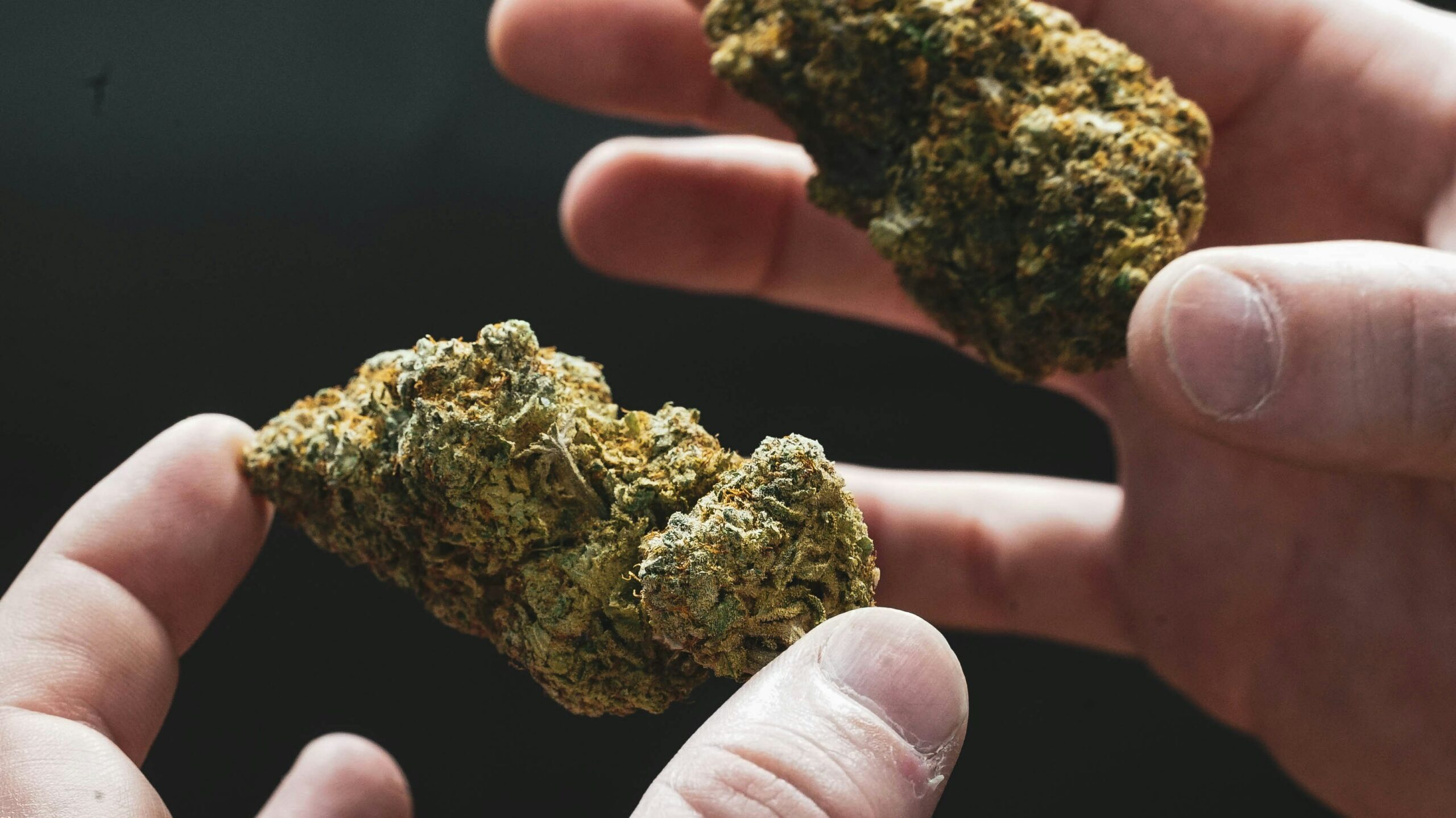
You harvest a room that tested perfectly in flower. Cannabinoid content is on target, terpene profile is strong, structure looks ideal. Then two weeks later, after drying and trimming, the aroma is muted, batches feel inconsistent, and final weight is lower than projected.
This situation is common in professional operations, especially during scale-up. Cultivation gets most of the attention, but the cannabis post-harvest process is where quality is either preserved—or quietly lost.
Drying cannabis, curing buds, and applying the right trimming techniques are not isolated steps. They form a continuous stabilization process that determines potency, flavor, shelf life, and commercial value. When designed correctly, post-harvest becomes predictable and efficient. When improvised, it becomes the main source of variability.
Let’s break it down with a practical, process-oriented perspective.
What is the cannabis post-harvest process?
Technically, the cannabis post-harvest process begins the moment plants are cut and ends when the flower reaches stable storage conditions and final presentation format.
It includes three critical phases:
- Controlled drying
- Moisture stabilization through curing
- Precision trimming
Each stage has a distinct purpose, but they are interdependent. Decisions in drying directly affect curing behavior. Moisture control influences trimming performance. Handling during trimming affects terpene retention and shelf stability.
In industrial environments—medical cannabis, GMP-oriented production, or large-scale hemp operations—post-harvest must be treated as a controlled biological stabilization process, not simply as storage time.
Drying cannabis: controlling water without losing terpenes
Drying cannabis is the controlled removal of internal moisture to reduce water activity and prevent microbial growth. The challenge is not removing water—it is removing it at the right speed.
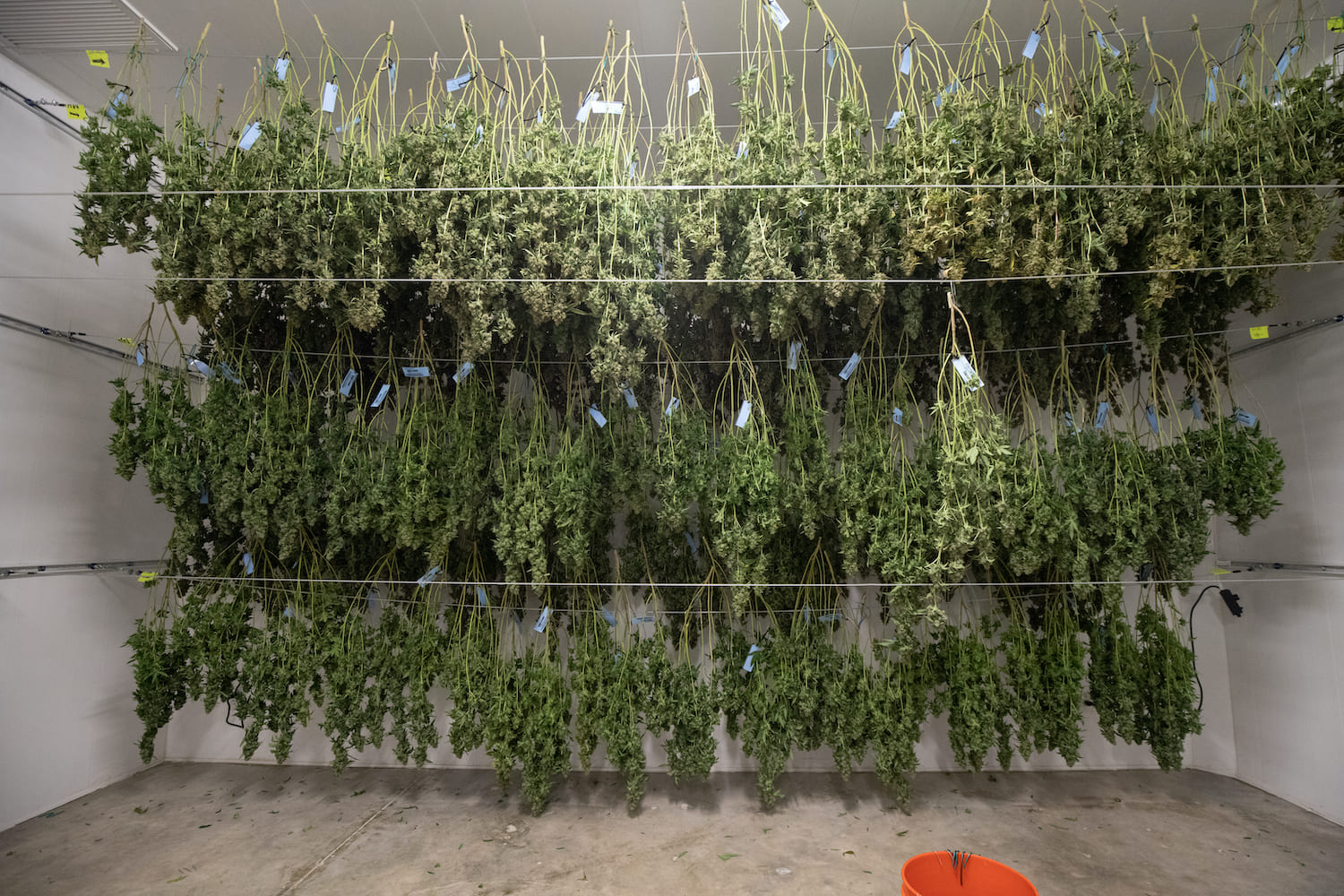
In professional settings, ideal drying conditions typically fall between 60–68°F (15–20°C) and 55–60% relative humidity. Gentle, indirect airflow is essential. Air should move within the room, not directly at the flower. Direct airflow accelerates surface drying, causing the exterior to become brittle while internal moisture remains uneven.
Drying usually takes 7 to 14 days, depending on plant structure, bud density, and room consistency. Dense, resin-heavy cultivars dry more slowly and require stable parameters.
While controlled room drying remains the industry standard, some facilities are adopting advanced technologies such as freeze dryers for cannabis to optimize terpene preservation and reduce overall processing time in large-scale operations.
Why is this phase critical? Because drying speed directly affects terpene preservation. Terpenes are volatile compounds. Excess heat or rapid moisture loss can significantly reduce aromatic complexity. At the same time, overly slow drying increases the risk of mold or microbial activity.
How do you know drying is progressing correctly? Small stems should snap rather than bend. Buds should feel dry on the outside but not hollow. Internal moisture content should stabilize around 10–12%.
If drying is poorly controlled, consequences appear later: harsh flavor, muted aroma, weight loss, or uneven curing behavior. Many facilities underestimate how much value is lost in this stage.
Curing buds: stabilizing the product
Once drying reduces moisture to a safe range, curing buds allows internal moisture to redistribute evenly and biochemical processes to stabilize the flower.
Curing is often misunderstood as “waiting time.” In reality, it is a controlled environment phase, typically maintained at 58–62% relative humidity and similar temperature conditions as drying.
During curing, residual chlorophyll breaks down, aroma develops complexity, and moisture equalizes throughout the bud structure. This stage typically lasts at least two to four weeks for premium flower markets.
In medical or regulated production, curing also influences consistency across batches. Without proper curing, product aroma remains grassy, texture feels inconsistent, and shelf life decreases.
How can you detect curing issues? Ammonia smells indicate excessive moisture. Large humidity fluctuations suggest poor container management. Overly dry buds mean excessive moisture loss during drying, which curing cannot reverse.
If curing is skipped or rushed, the flower may technically pass moisture tests but fail sensory expectations. In competitive markets, that difference matters.
Trimming techniques: precision, throughput, and trichome protection
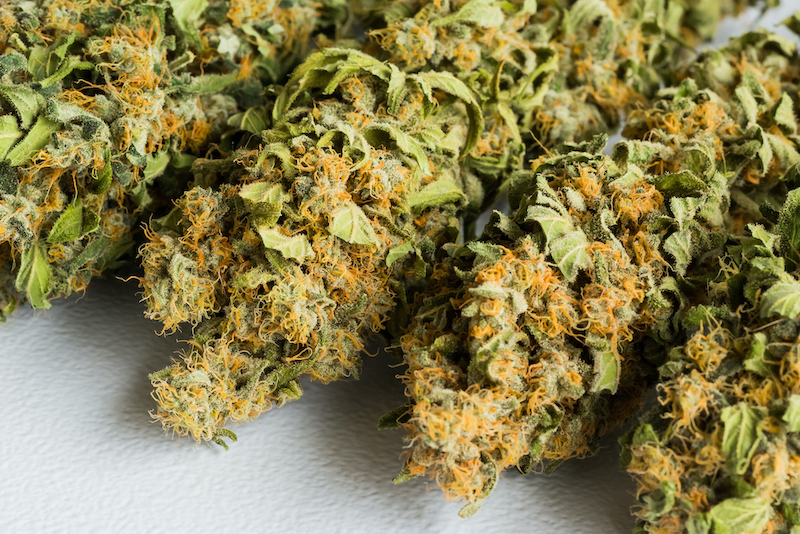
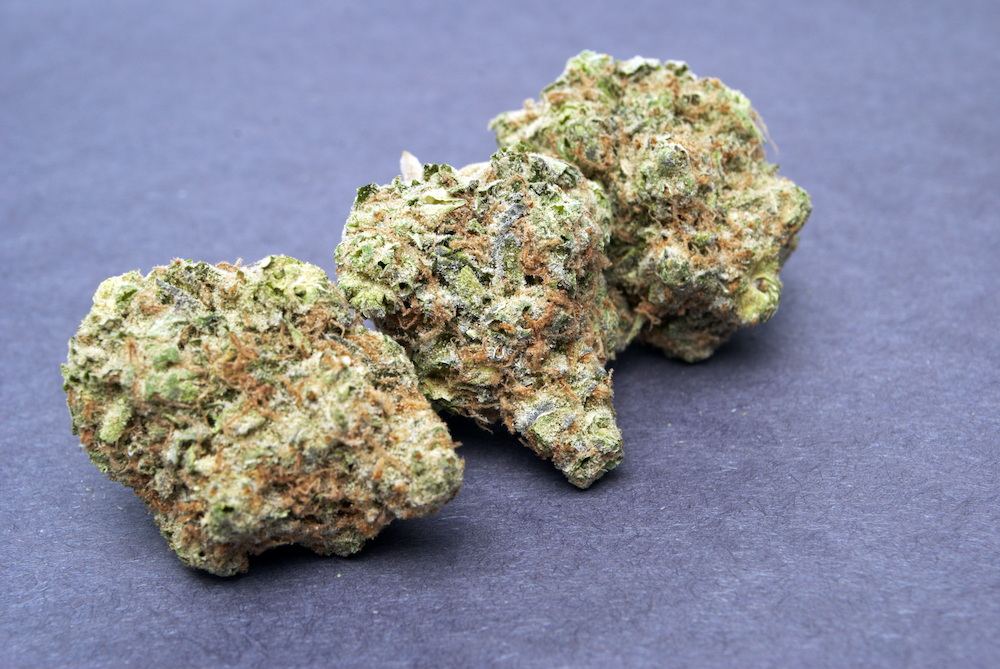
Trimming defines the final presentation and cannabinoid concentration per gram. It removes excess leaf material, standardizes appearance, and improves product value.
The key question for most facilities is not whether to trim—but how.
Manual trimming offers maximum control and is often preferred for premium small-batch production. However, it requires trained staff, is labor-intensive, and introduces variability between operators.
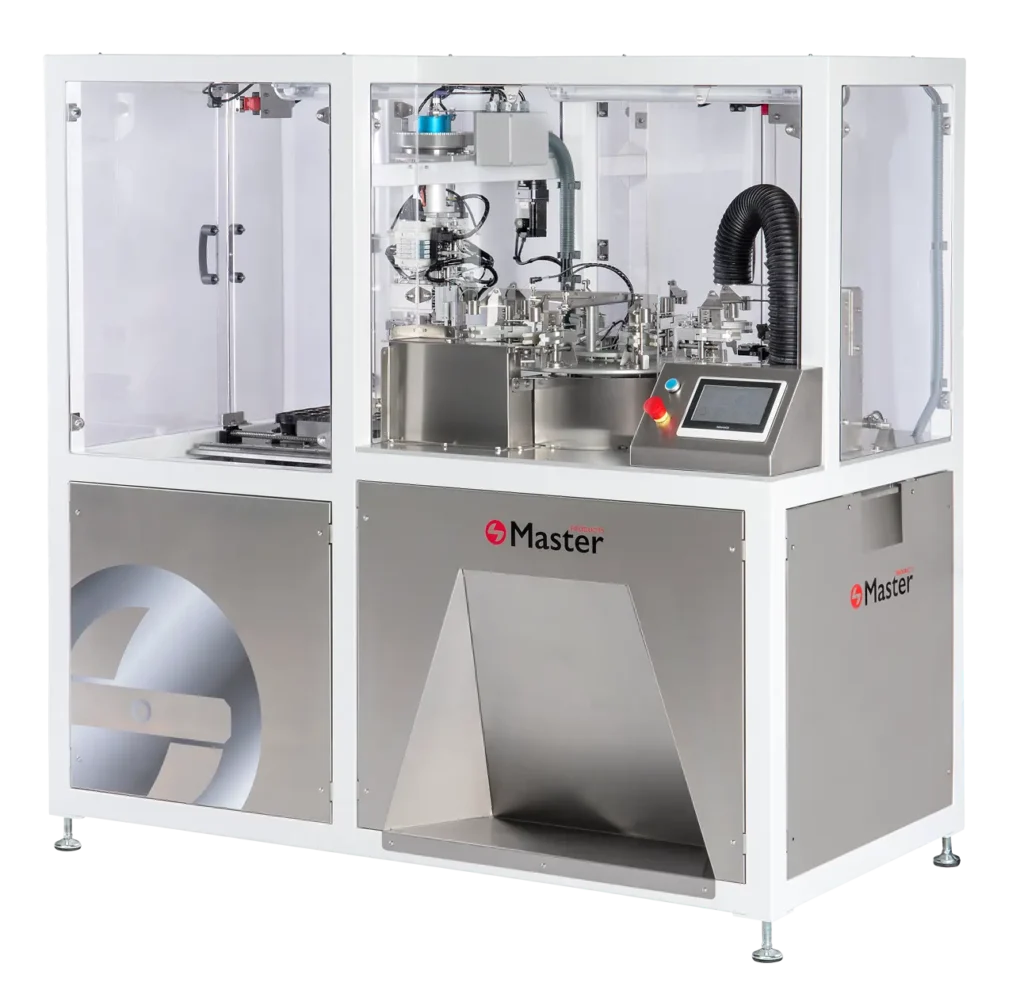
Semi-automatic and industrial cannabis trimming machines allow consistent throughput and reduce labor dependency.. The concern professionals often raise is trichome damage. The reality is that trimming performance depends on calibration, cultivar type, moisture level, and equipment design.
Dry trimming, performed after drying, is common in large-scale operations because it allows better structural integrity during mechanical handling. Wet trimming, done immediately after harvest, can simplify drying but increases handling at a fragile stage.
What determines the right approach? Volume, labor costs, flower density, and market positioning. There is no universal solution. The correct trimming techniques depend on operational goals.
If trimming is poorly optimized, the results are visible: broken buds, excess shake, trichome loss, and inconsistent appearance. These issues affect both yield and brand perception.
What happens if the workflow is not designed as a system?
When drying, curing, and trimming are treated as separate tasks rather than an integrated process, inefficiencies accumulate.
Batches move unpredictably between rooms. Labor peaks become unmanageable. Moisture inconsistencies complicate trimming. Reprocessing increases. Quality complaints rise.
From a production standpoint, the biggest hidden cost is variability. Inconsistent post-harvest conditions create inconsistent results. That unpredictability affects testing outcomes, packaging timelines, and inventory management.
In regulated markets, it may also impact compliance.
When does it make sense to scale or automate?
As production increases, manual post-harvest becomes harder to manage. Signs that automation may be justified include:
- Harvest volume exceeding daily processing capacity
- Labor costs dominating post-harvest expenses
- Inconsistent trimming quality
- Bottlenecks between drying rooms and trimming teams
- Increased audit or compliance requirements
Scaling does not mean sacrificing quality. It means designing repeatable, controlled systems that maintain quality at higher volumes.
This is where process-focused engineering becomes critical. Companies specializing in industrial post-harvest solutions have built expertise around systems that balance throughput with flower protection.
Automation makes sense when it supports process control—not when it simply increases speed.
Common mistakes in the cannabis post-harvest process
Several errors appear repeatedly in professional facilities:
- Overdrying flower to “play safe” with mold risk
- Using excessive airflow to reduce drying time
- Skipping proper curing to accelerate time-to-market
- Choosing trimming equipment based solely on speed
- Ignoring cultivar-specific differences in structure
These mistakes often stem from pressure to increase turnover. However, short-term acceleration can compromise long-term quality.
A process mindset for long-term performance
The cannabis post-harvest process is not a secondary stage. It is the bridge between cultivation and commercialization.
Drying cannabis establishes structural stability.
Curing buds refines quality and aroma.
Trimming techniques define presentation and efficiency.
When these stages are designed with environmental precision, trained operators, and appropriate equipment selection, the result is consistent potency, preserved terpene profiles, optimized labor use, and predictable production planning.
For professional growers, production managers, and engineers, the real competitive advantage is not harvesting more—it is stabilizing better.
Post-harvest is where biological potential becomes commercial value. Designing it with control and technical rigor is what separates improvised operations from scalable, high-performance production.